
Mercy in the Past: Mercy for the Future- Jennifer Oaten, Principal, Santa Maria College
A Shared Heritage
When Ursula Frayne and her small group of Mercy Sisters stepped ashore in the Swan River Colony in 1846, they had very little. What they had was a clear sense of purpose. They came to educate girls, shelter those in need, and serve those society often overlooked. Within a few years, they established their first girls’ school, which became Mercedes College. From that beginning, the Mercy story in Western Australia grew.
St Brigid’s College followed in 1929, extending the Mercy mission into the hills. Each of the three schools developed differently, shaped by its own community and context. But they shared a common foundation: the conviction that education is one of the most powerful things you can offer a young woman, and that the values you embed in that education matter as much as the content.
Santa Maria College opened in Attadale in 1938, built on land the Sisters had purchased despite its reputation, as the story goes, for being “in the backwaters of Perth in the mosquito-infested swamps.” The Sisters were undeterred. They sold land nearest the river to fund construction, and within a decade they had created something that would endure for generations.
Combined schools choir
Coming Together as Mercy
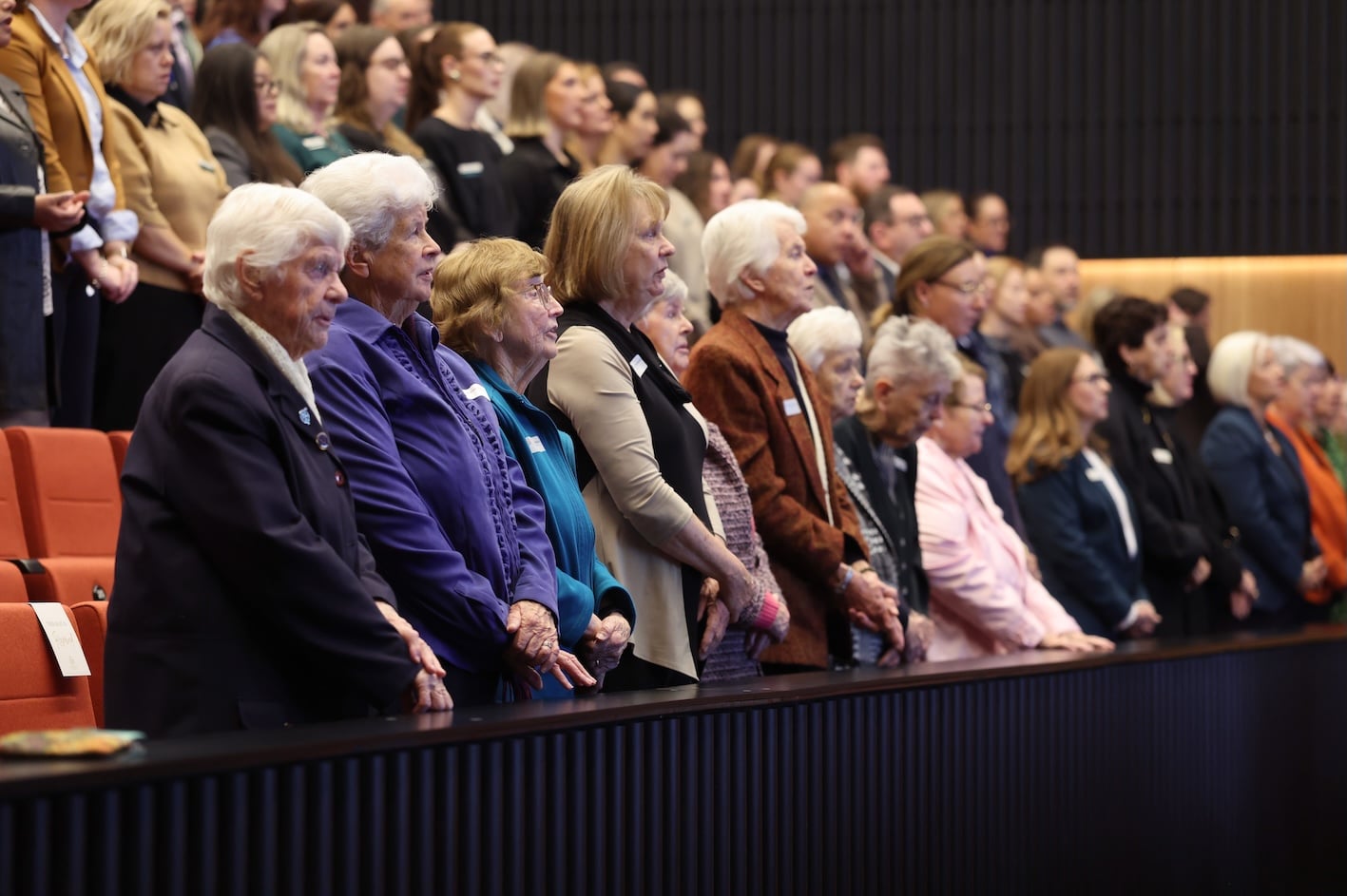
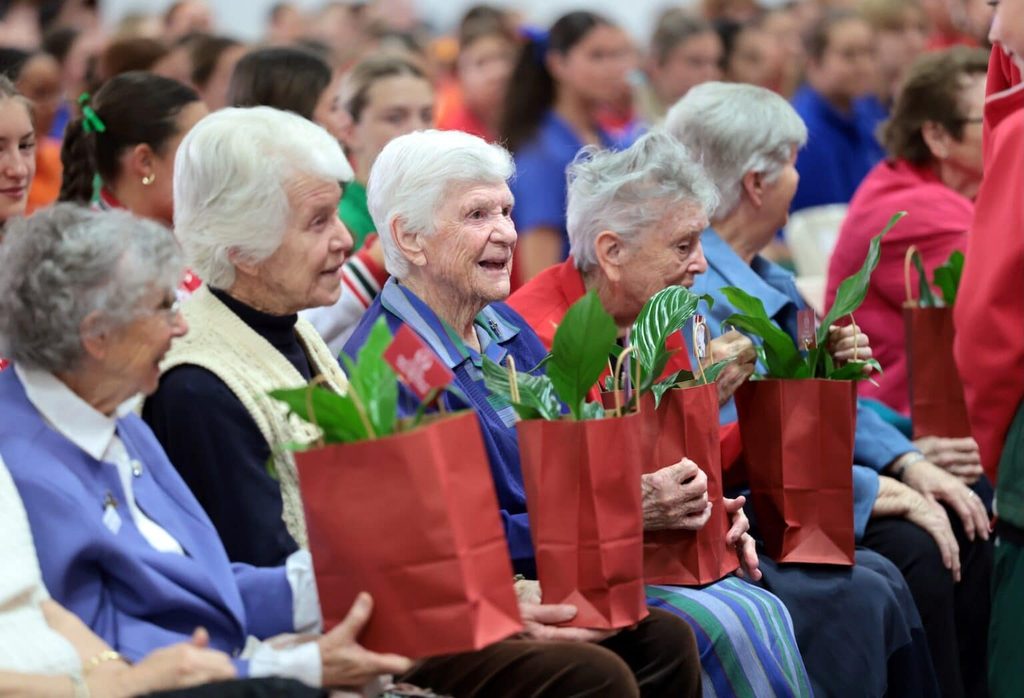
To celebrate 180 years since the Mercy Sisters arrived in Western Australia, all staff from our three Mercy schools, Mercedes College, St Brigid’s College, and Santa Maria College, recently gathered as one community for a shared professional learning day for the first time in our history. We were joined by many special guests, including an incredible 18 Sisters of Mercy and staff from affiliated Mercy schools. For the first time, we had stood alongside each other and acknowledged our shared heritage.
With the theme Walking Forward Together as People of Mercy, the day featured a shared Mass, formation, and genuine connection, held in Santa Maria’s new Cultural Centre, which felt like the right space for such a significant gathering. Our shared purpose was clear as we celebrated the enduring legacy of Catherine McAuley and the Sisters of Mercy, whose vision continues to inspire our schools and communities today.
We were honoured to begin the day with Mass celebrated by Archbishop Timothy Costelloe SDB, led by the beautiful singing of a combined staff and student choir from our three schools. Archbishop Costelloe spoke about the call and responsibility of staff in Catholic schools to carry the Mission, particularly our Mercy ethos.
Sister Karon Donnellon RSM, Leader of the Institute of the Sisters of Mercy of Australia and Papua New Guinea, reflected on Carrying Forward the Mercy Story, and spoke to the legacy we are part of and what it asks of us now, particularly focusing on
- Mercy as a mode of relationship
- A leader has an unusual degree of power to project their light or their darkness
- Catherine McAuley’s willingness to initiate and venture into the unknown and her trust in others’ capacity to grow and develop.
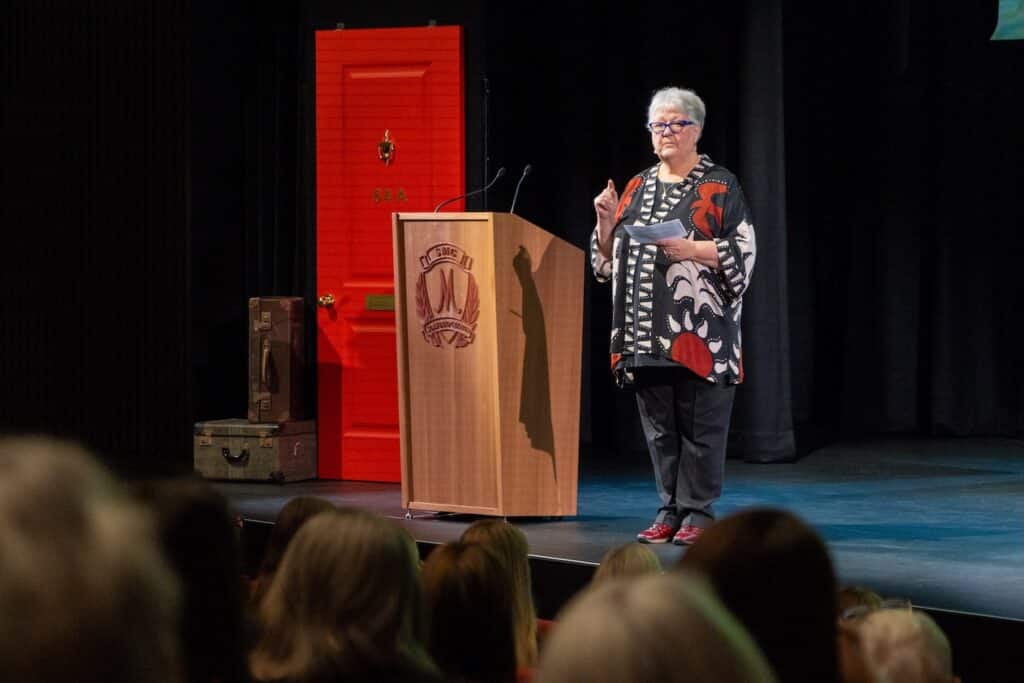
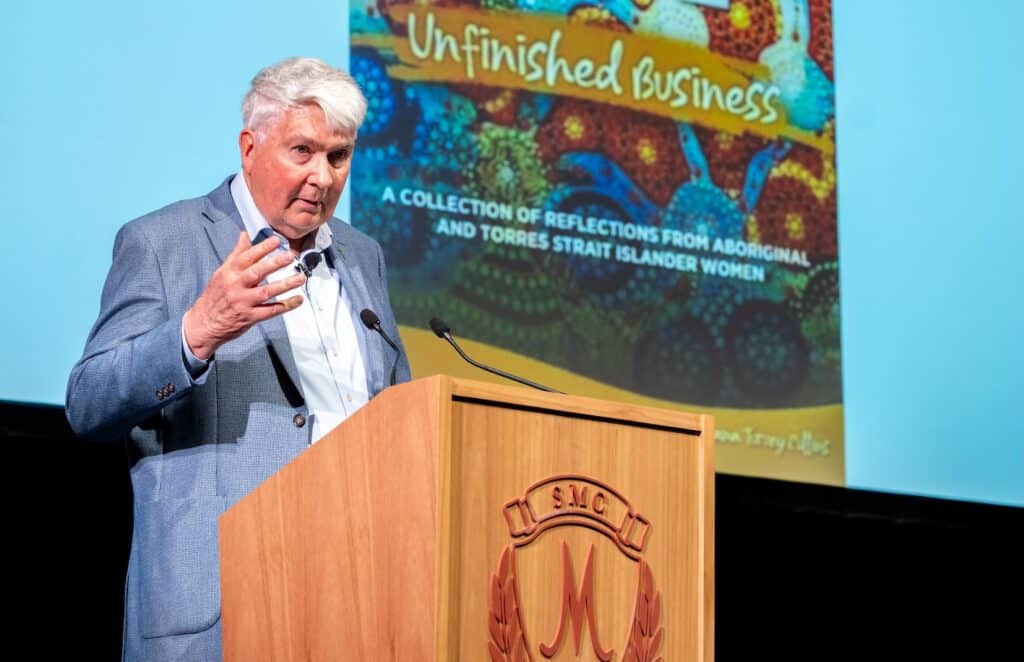
Father Frank Brennan SJ, a Jesuit priest, lawyer, adjunct professor at Australian Catholic University, and human rights activist, connected the Mercy tradition to broader questions of justice and human dignity, speaking to Faith in a Changing World. His focus was on
- Putting the person at the centre and that relationships come before opinions, people before programmes.
- The importance of indigenous voices, listening, understanding and reconciliation
- Promoting the dignity and full participation of women in the church.
Staff then participated in collaborative think tanks, sharing perspectives on many contemporary topics.
What stayed with me most was not any single address. It was the room itself. Over four hundred staff from three different schools gathered in the same place, around the same questions. People who have been doing this work for years, some of them for decades. A conversation between two educators who have never met, discovering they are working from the same set of values.
Sisters of Mercy
What Mercy Looks Like, 180 Years On
Catherine McAuley did not set out to build institutions. She set out to respond to need. Institutions followed to help address that need. What we have inherited, 180 years on, is not a fixed set of rules but a way of approaching our work in schools. The person in front of you should always be at the centre of our work.
Our Mercy values at Santa Maria, Hospitality, Compassion, Justice, Service and Excellence, are recognisable in the language of our sister schools, even where the particular words differ. Sitting alongside colleagues from Mercedes College and St Brigid’s College, that shared language was immediately apparent.
The conversations that happen at the edges of a day like this often stay with you. Over morning tea, in the lunch queue, at the end of a session. Staff heard about approaches they had not encountered. They found that challenges they had assumed were particular to their school were shared much more widely, and that colleagues had found ways through them.
Over the years, I have attended Mercy Education gatherings that brought together staff from schools across several states, and those days are always valuable. Our day felt different because it was local. These schools share our city. In many cases, they share our history in ways that are closer than any of us had quite realised.
One hundred and eighty years is a long time. Thousands of young women have been educated in Perth’s Mercy schools. Many of them are now raising families, leading organisations and shaping communities. The Mercy tradition has had an impact on their lives, whether they would use that language to describe it or not.
As I reflect on our gathering, I keep returning to the question of continuity rather than the anniversary itself. The Sisters who arrived in 1846 made choices we still live with, in the best possible sense. The choices we make now, about how we educate, what we stand for, and how we treat the people in our communities, will shape what the next generation inherits.
In coming together, we are reminded that the Circle of Mercy extends well beyond our own schools. Together, we continue to move forward with compassion, justice, service, and hope, carrying on the story of Catherine McAuley and the Sisters of Mercy.


