
A Mercy Day Reflection and a Brief History of Mercy in QLD by Jessica Wade, Principal, St Saviour’s College Toowoomba (199 Years of Mercy)
On 24 September this year, Mercy organisations around the world will celebrate 199 years since Catherine McAuley opened the House of Mercy on Baggot St, Dublin. The global mercy story is that, from the beginnings at Baggot St, Catherine McAuley’s radical Gospel love rippled across the world.
Today, according to Mercy International, the global Mercy network operates in over 30 countries spanning six continents, engaging in education, healthcare, and social outreach. At its peak in the 50s and 60s, there were 20,000 Sisters of Mercy globally, and today there are 7000 Sisters of Mercy worldwide.
Whilst many of us know well the story of Catherine McAuley and her walking nuns in Dublin, the early Mercy story in Queensland is equally astonishing.
Earlier this year, I was fortunate to travel to Brisbane to visit two important places in Queensland’s Mercy story. The first was All Hallows’ School and its newly opened Heritage Centre and the second was the Mater Hospital.
In 1860, with only four days’ notice, Mother Vincent Whitty led a party of five other women from Ireland to Queensland. After five months at sea, they steamed up the Brisbane River on the evening of 10 May 1861, landing not far from the present site of All Hallows’ School.
The Sisters of Mercy founded All Hallows’ School in 1861, Queensland’s first secondary school for girls. Just two years later, these same trailblazing women founded St Savior’s Primary School here in Toowoomba. I was amazed to see the original school bell of my primary school, St Mary’s Warwick, soundless in one of the glass cabinets.
Listening to the stories at the Heritage Centre and the Mater Hospital, the words of the Sisters of Mercy washed over me. Catherine McAuley had instructed her sisters that the Spiritual and Corporal Works of Mercy were to be the actual “business” of their lives. But Catherine also knew the tension in which their service existed: ‘there can be no business without the mission and no mission without the business.’
These sisters were smart, astute, austere and forward-thinking businesswomen. It is impossible to build and run a juggernaut like Mater, or establish hundreds of schools, without well-honed business acumen, and this is exactly what these empowered women had in spades.
Mother Vincent Whitty understood that if the sisters were to survive and thrive in the far-flung colonial outpost of Brisbane in the 1860s, she first needed to create a steady flow of hands that would bring the mission to life. She needed to secure her workforce.
Despite the slow, arduous dangers of sea travel in the 1800s, Ellen Whitty committed to building and maintaining strong connections with the feeder convents in Ireland. She spent months of the year travelling back to Ireland to tell of the great needs of the southern lands and recruiting eager young women to come on the adventure of a lifetime to meet the needs of the fledgling Brisbane colony.
In modern terms, she knew her people would be the mission’s greatest enablers, and she created and maintained a completely tech-free recruitment pipeline.
The early Mercy story in Queensland is full of stories that testify to these women’s strength and their willingness to withstand hardship and difficult times. Their courage in the face of adversity should inspire each of us to recognise both our strength and our capacity to make a difference.
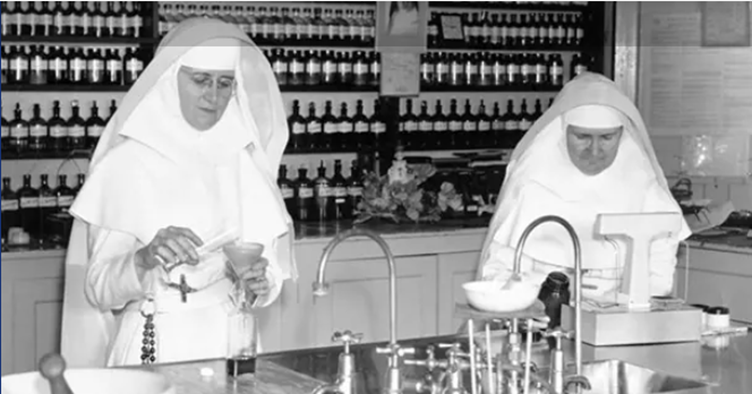
The St Saviour’s College Health Hub partners with Mater Education to provide health qualifications for our students. Today, Mater is an incredible behemoth and juggernaut, but it is worth returning to its foundation story.
Sister Vincent Whitty knew that, in Brisbane’s infancy, it needed healthcare and education most.
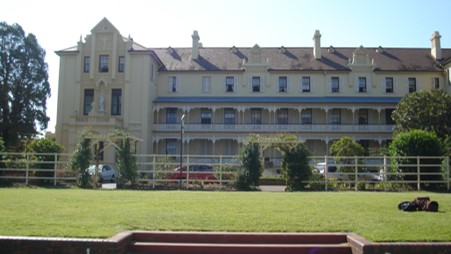
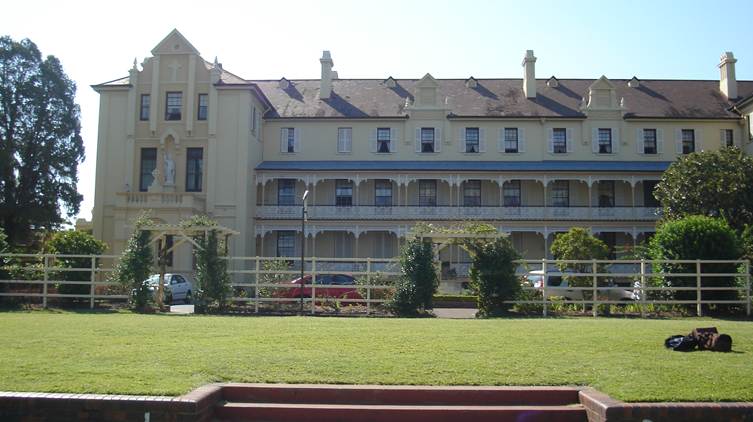
In response, she hired the nation’s best architect, Robin S Dods, to build an incredible three-storeyed, verandah-wrapped private hospital for the city’s wealthiest people. Sounds crazy, right? And it certainly sounds like a departure from the Sisters’ mission to serve the poor.
The hospital was advertised as having “cool summer breezes” to entice doctors across the river. It was visually beautiful and fitted out with the best technologies of the time.
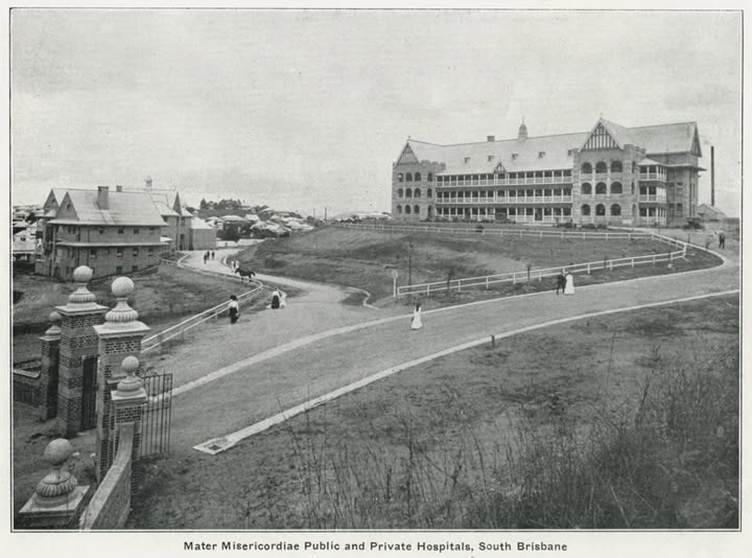
Vincent Whitty had succeeded in exactly what she set out to do. She attracted Brisbane’s best doctors and surgeons to the hospital, along with a steady stream of full fee-paying patients.
And here is where the story’s magic happens.
With the private hospital established and the income stream created, Mother Whitty then used that income to build a second hospital: a public hospital to serve the poor. Just 18 months later, in 1911, they built the Mater Public Hospital.
The sisters’ vision and commitment to the poor were so strong that they knew they needed a private hospital to create a sustainable income stream, but their true mission was to serve the poor. And the poor were not in a private hospital.
Their response to the needs of their time: as true trailblazing, empowered women, they built two hospitals—one up the hill and one down—so everyone had access to healthcare.
It was a brilliant plan. The best doctors in Brisbane would run between the two buildings, sharing expertise, care, and resources. The rich and the poor having simultaneous access to the very best healthcare.
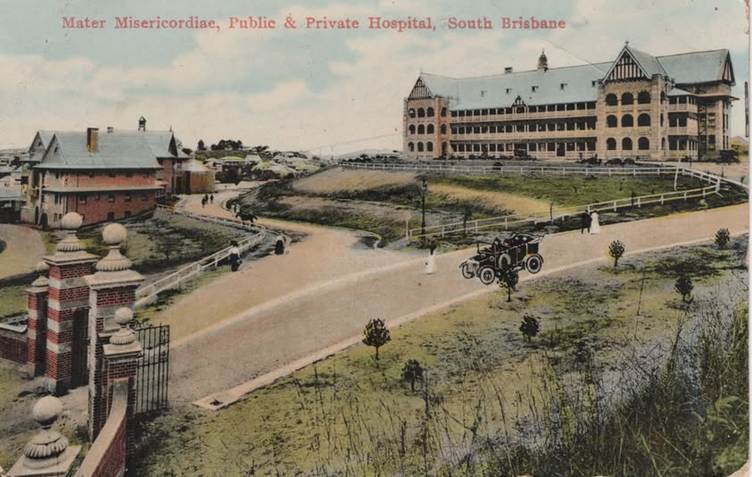
We talk about Catholic Social Teaching and the inherent dignity of every person. Here it is demonstrated in our local history: a built testament to the sisters’ recognition of every person’s inherent dignity and right to healthcare.
One final story.
During our tour of the hospital, I was told to look at the roof of the original public hospital. A small glass turret sits on every side, almost like a bell tower.
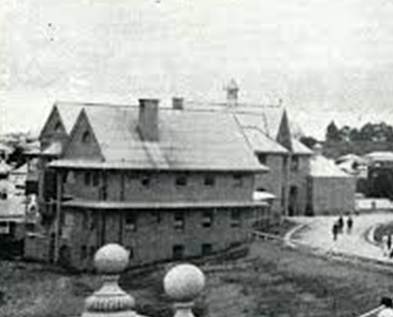
I was told that from this tiny turret, a young sister sat there day and night, watching for ambulances crossing the river. When she saw one approaching, she would pull a cable to alert her colleagues below that an ambulance was crossing the river and all hands were required.
I can only imagine how hot, cold, and lonely that task must have been at times. But it was necessary work, and it enabled the mission. It reminds all of us that all work matters. Some people, like the doctors and nurses below, do work that is widely celebrated and acclaimed; others do unromantic, menial tasks, like the junior sister in the turret. Both bring the mission to life in equal measure. One will not succeed without the other.
Catherine McAuley is famed for her practicality. No one knew this better than the early Sisters of Mercy setting up ministries here in Queensland. They knew that without financial stability and sustainability, nothing would remain. No mission could exist without the business.
On this 199th Mercy Day, it is my prayer for every community that we hold tightly to the simple truth that there is no business without the mission. It is simultaneously my prayer that we find inspiration in these incredible women who, from singular Baggot St. beginnings, created a global, multi-sector living testament to practical care and Gospel love: the Mercy story.


